Roof tilt and orientation: how geometry changes output
Which way the roof faces and how steep it is decide how much sunlight the panels catch. Where the optimum sits, and when to miss it on purpose.
The article explains general patterns. Your roof, your equipment and your consumption differ, and the numbers for them come from a survey.
Two angles decide how much of the sunlight arriving at your address actually lands on the panels. Neither can be changed after the mounting rails go up, which makes them worth understanding before the quote is signed.
Azimuth: which way the roof faces
Azimuth is the compass direction the panel surface points. In the northern hemisphere, and therefore in Cyprus, a surface facing due south spends the most time square to the sun and collects the most energy over a year.
Turn away from south and annual production falls. The fall is gentle at first — a roof pointing somewhat east or west of south loses a modest share — and steepens as you approach due east or due west. A north-facing slope is the one case where the geometry is genuinely poor.
Gentle is the operative word. People sometimes abandon a project because the roof is not exactly south. That is usually an overreaction, and PVGIS will tell you the actual cost of your actual direction in a few minutes.
Tilt: how steep the surface is
Tilt is the angle between the panel and the horizontal. A flat roof is zero; a steep pitched roof might be thirty-five degrees or more.
The rule of thumb is that the yearly optimum sits near the latitude of the site. Cyprus lies at a latitude that puts the optimum in the range of a normal pitched roof, which is convenient — most tiled roofs on the island are already close enough that reangling them would not repay the mounting cost.
Tilt also decides the seasonal shape of production. A shallower angle favours the summer sun, which is high in the sky. A steeper angle favours winter, when the sun stays low. The yearly optimum is a compromise between the two, and it is not always the compromise you want.
When to miss the optimum on purpose
Maximum annual production and maximum saving are different targets.
Consider a household that is empty until the evening. A west-facing array produces less over a year than a south-facing one, but it produces more of it late in the day — when that household is actually home and consuming. Depending on what surplus is worth under the connection scheme, less production can mean more saving.
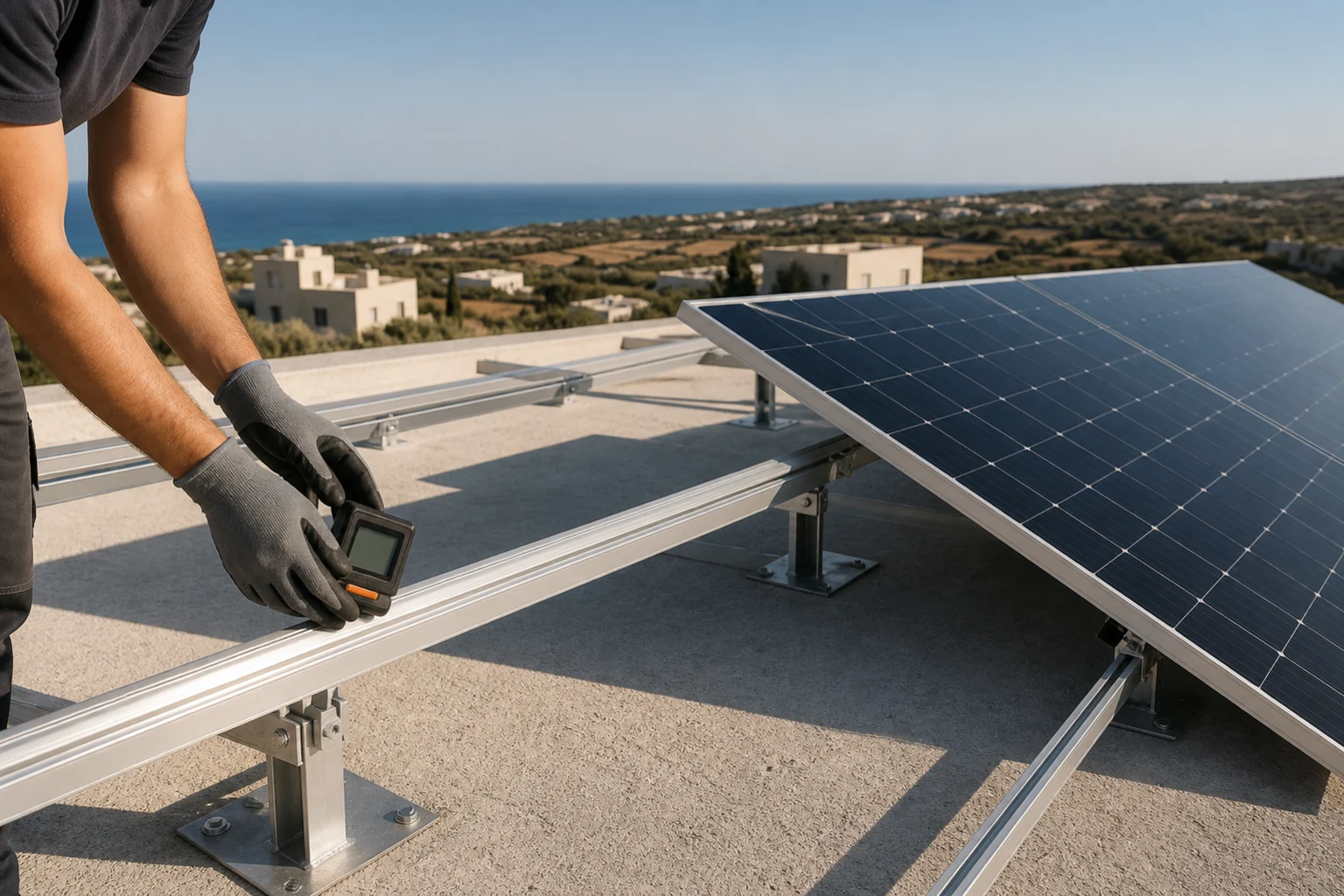
Flat roofs have a version of the same trade-off. Panels can be tilted up on frames toward the optimum, but tilted rows shade each other unless they are spaced apart, and spacing them costs roof area. Laying them flatter fits more panels in the same space at a lower yield each. Which wins depends on how much roof you have and how much you need.
There is no universally right answer here. There is a right answer for your consumption pattern, and it should be stated in the quote rather than assumed.
Shading beats geometry
A perfectly angled panel in shadow produces almost nothing, and shading losses are not proportional to the shaded area — depending on how the array is wired, a shadow across one corner can drag down a whole string.
The things that cast those shadows are easy to miss on a site visit: a chimney, a parapet wall, a water tank, a neighbouring building, a tree that will be considerably taller in ten years. They also move through the day and through the year, and the winter shadow is the long one.
Any serious assessment includes a shading survey, not a glance at the roof at noon in June.
How to check your azimuth yourself
You do not need equipment to get a usable figure before the first site visit.
Open a satellite map of your building and look at which way the roof ridge runs — panels sit on the slopes either side of it, facing perpendicular to the ridge. Alternatively stand on the roof or below the slope with a phone compass and read the direction the surface faces. Be aware that compasses point to magnetic north, which differs slightly from true north.
Either method is accurate enough to enter into PVGIS and get a production estimate you can hold a conversation around.